

How to Become a Health and Safety Advisor
Career Guide | BV Safety Academy
By Dean Ferguson, CEO & Head of Learning Partner, BV Associates Limited
Return to Academy Home Page
Introduction
Every year I speak to people who tell me they’re thinking about a career in health and safety.
Some have worked in construction for twenty years and are looking for a new challenge. Others are supervisors or managers who enjoy helping people and want to build on the experience they’ve already gained. I also meet Armed Forces service leavers who are looking for a profession where leadership, communication and risk management are genuinely valued.
Despite their different backgrounds, almost all of them ask the same question.
“How do I become a Health and Safety Advisor?”
The interesting thing is that very few of them are really asking about the job title.
What they’re actually asking is whether they have the experience, the ability and the opportunity to build a successful career in a completely different profession.
The answer, in many cases, is yes.
Health and safety is one of the few professions where practical experience is every bit as valuable as academic knowledge. Employers are looking for people who can communicate effectively, influence others, solve problems and make sensible decisions. Those qualities are developed over years of working with people, leading teams and managing real situations.
Qualifications are an important part of that journey, but they’re only one part.
Experience gives you context.
Learning helps you understand the principles.
Together, they build competence.
Throughout this guide, I’d like to explain the typical route into the profession, the qualifications employers look for and, perhaps more importantly, the personal qualities that make someone successful in a health and safety role.
Because becoming a Health and Safety Advisor isn’t simply about changing jobs.
It’s about building a career that allows you to make a positive difference every single day.
What Does a Health and Safety Advisor Actually Do?
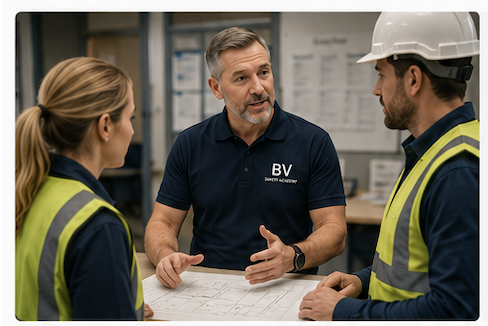
When people hear the title Health and Safety Advisor, they often picture someone carrying out inspections, completing paperwork or reminding people about rules and regulations.
While those activities certainly form part of the role, they only tell a small part of the story.
In reality, a good Health and Safety Advisor is a problem solver, a communicator and, perhaps most importantly, a trusted source of advice. Their role is to help organisations create environments where people can work safely, confidently and productively. That means understanding how businesses operate, recognising where risks exist and working alongside managers and employees to find practical solutions that protect people without unnecessarily restricting the work that needs to be done.
One of the things I enjoy most about health and safety is that no two days are ever quite the same.
You might spend one morning carrying out a workplace inspection, the afternoon supporting a manager with a risk assessment and the following day delivering training to a group of supervisors. The role constantly changes because every workplace, every project and every team presents different challenges.
That’s one of the reasons so many people enjoy working in the profession.
It’s varied.
It’s practical.
And it gives you the opportunity to make a genuine difference.
Over the years I’ve worked with Health and Safety Advisors across construction, manufacturing, engineering, logistics, healthcare, education, local government and many other industries. Although their working environments were very different, they all had something in common.
They weren’t there to tell people what they couldn’t do.
They were there to help people find safer ways of doing what needed to be done.
I think that’s an important distinction because it changes the way people view the profession. The best Health and Safety Advisors don’t build barriers between safety and productivity. They help organisations achieve both by encouraging sensible decision-making, good planning and effective communication.
Strong relationships are also an essential part of the role.
A Health and Safety Advisor needs to earn the trust of managers, employees and contractors. That means listening as much as talking, understanding the practical realities of the workplace and offering advice that’s realistic, proportionate and achievable.
In many ways, the role is as much about people as it is about health and safety.
Technical knowledge is important, but the ability to communicate clearly, influence others and build positive working relationships is often what separates a good advisor from an outstanding one.
That’s why I believe the profession attracts such a wide range of people.
If you enjoy helping others, solving problems and making a positive contribution to the organisations you work with, a career as a Health and Safety Advisor can be both professionally rewarding and personally fulfilling.
For me, that’s what the role has always been about.
Helping people go home safely at the end of the day while supporting businesses to succeed.
Do You Need Previous Experience?

One of the biggest concerns people have when considering a career in health and safety is whether they already need experience in the profession before they can get started.
It’s a question I’m asked regularly, and the answer often surprises people.
No, you don’t need to have worked as a Health and Safety Advisor before you begin building a career in health and safety.
What you do need is experience that can be transferred into the role.
Throughout my career, I’ve met people from almost every industry imaginable who have gone on to build successful careers in health and safety. Construction supervisors, engineers, production managers, warehouse team leaders, facilities managers, military personnel, emergency service workers and business owners have all brought valuable experience with them. Although their job titles were different, many of the skills they had developed over the years were exactly the skills employers were looking for.
Think about the responsibilities you’ve had during your own career.
Have you supervised people?
Carried out inspections?
Investigated incidents?
Delivered training?
Planned work?
Managed contractors?
Solved problems under pressure?
If the answer is yes to any of those questions, you’ve already developed skills that are highly relevant to health and safety.
One of the biggest mistakes people make is assuming they have to start from the beginning.
In reality, most people don’t.
They already possess many of the qualities that make an effective Health and Safety Advisor. What they often lack is the recognised qualification and the broader understanding of health and safety management that allows them to bring those existing skills together.
That’s why qualifications such as the NEBOSH National General Certificate are so valuable.
They don’t replace your experience.
They help you build on it.
I’ve always believed that the strongest Health and Safety Advisors are those who understand the realities of the workplace because they’ve experienced them first-hand. They’ve managed difficult conversations, worked to tight deadlines, balanced competing priorities and learned how to communicate with people from different backgrounds.
Those experiences can’t be taught in a classroom.
They’ve already become part of who you are.
Learning simply helps you view them through a different lens.
One group that consistently demonstrates this is Armed Forces service leavers.
Having made that transition myself, I understand how easy it is to underestimate the value of military experience. Leadership, planning, teamwork, discipline, communication and risk management are qualities developed every day in the Armed Forces. The challenge isn’t developing those skills.
It’s recognising how transferable they already are.
The same is true for many people outside the military.
You’ve probably developed far more relevant experience than you realise.
The next step isn’t starting again.
It’s building on the foundations you’ve already created.
That’s why I encourage people not to focus on what they haven’t done.
Instead, take a moment to recognise everything you already bring to the profession.
You may be closer to your goal than you think.
Qualifications That Help You Get Started
Once people realise they already have many of the transferable skills needed to work in health and safety, the next question is usually about qualifications.
“Where do I start?”
The answer depends on your experience, your current role and where you want your career to take you. However, for many people considering a career as a Health and Safety Advisor, the NEBOSH National General Certificate remains the qualification I recommend most often.
There are several reasons for that.
First, it’s recognised by employers across a wide range of industries. Whether you’re applying for roles in construction, manufacturing, engineering, logistics, healthcare or the public sector, you’ll regularly see the National General Certificate listed as either an essential or desirable qualification.
Secondly, it provides a broad understanding of health and safety management rather than focusing on a single industry. That flexibility is valuable because careers often develop in unexpected ways. You may begin working in one sector before discovering opportunities in another, and a qualification that supports movement between industries gives you greater choice throughout your career.
Just as importantly, the General Certificate helps you develop the way you think about health and safety. It isn’t simply about learning legislation or completing risk assessments. It’s about understanding why accidents happen, how risks can be managed sensibly and how good health and safety contributes to successful organisations.
For learners with more specialist ambitions, there are additional qualifications that may become relevant as their careers progress. Construction professionals, for example, often choose to study the NEBOSH Health and Safety Management for Construction qualification, while those working in high-hazard industries may later move into Process Safety or other specialist areas.
The important thing is not to feel that you have to complete every qualification available.
Professional development isn’t a race.
Each qualification should have a purpose and support the next stage of your career. I’ve always encouraged learners to build strong foundations before looking towards more specialist or advanced study. In my experience, that approach produces confident professionals who understand not only what to do, but why they’re doing it.
Qualifications open doors.
Experience helps you walk through them.
Together, they provide the platform on which successful careers are built.
If you’re just beginning your journey, focus on gaining a recognised qualification that develops your understanding and complements the experience you already have. Once you’ve done that, the next steps often become much clearer because you’ll have both the confidence and the knowledge to recognise new opportunities as they arise.
The Skills Employers Really Look For
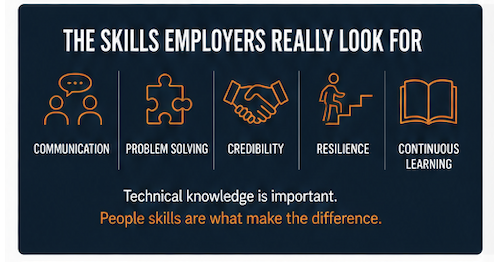
Qualifications will almost certainly help you get an interview, but they’re rarely the reason someone is offered the job.
Over the years I’ve spoken with countless employers, recruitment specialists and health and safety leaders, and the conversations almost always come back to the same point. Technical knowledge is important, but it’s only one part of what makes an effective Health and Safety Advisor.
The people who thrive in the profession are those who can build relationships.
Health and safety is, above all else, about working with people. You can have an excellent understanding of legislation and risk management, but if you can’t communicate your ideas clearly or gain the trust of those around you, it becomes much harder to influence behaviour and create lasting improvements.
Communication is therefore one of the most valuable skills you can develop.
A good Health and Safety Advisor knows how to explain complex subjects in a way that people understand. They listen before they speak, ask thoughtful questions and adapt their approach depending on whether they’re talking to a site operative, a supervisor or a company director.
Problem-solving is equally important.
Every workplace is different, and no two situations are ever exactly the same. Employers value people who can assess a situation objectively, identify the underlying issues and recommend practical solutions that protect people while allowing the business to operate effectively.
Another quality I believe is often overlooked is credibility.
Credibility isn’t created by a certificate hanging on the wall. It’s earned through honesty, consistency and professionalism. People are far more likely to accept advice from someone who understands the realities of their work and takes the time to explain the reasons behind their recommendations.
I’ve always believed that the best Health and Safety Advisors spend more time asking questions than giving answers.
They take the time to understand how work is actually carried out before suggesting improvements. They recognise that the people doing the job every day often have valuable insights, and by involving them in the conversation they build solutions that are both practical and sustainable.
Employers also value resilience.
Not every recommendation will be accepted immediately, and not every conversation will be straightforward. There will be occasions when you need to challenge unsafe practices, influence reluctant stakeholders or explain why change is necessary. The ability to remain professional, respectful and persistent is one of the defining characteristics of successful advisors.
Finally, employers look for people who never stop learning.
Health and safety is constantly evolving. New technologies emerge, legislation develops and industries adopt different ways of working. The professionals who continue to grow are those who remain curious, keep developing their knowledge and are willing to learn from every experience they encounter.
When I think about the outstanding Health and Safety Advisors I’ve met throughout my career, they all share something in common.
They happen to know health and safety.
But they’re exceptional because they understand people.
For me, that’s the difference between someone who works in health and safety and someone who truly makes a positive impact through it.
A Typical Career Path

One of the things I enjoy most about working in health and safety is that there isn’t a single route to success.
Unlike some professions, where the career ladder is rigidly defined, health and safety offers a wide range of opportunities across almost every industry. Whether you want to work in construction, manufacturing, engineering, healthcare, logistics, education or the public sector, the principles remain the same, even though the environments may be very different.
For many people, the journey begins with a role as a Health and Safety Advisor.
This is where you develop practical experience, learn how organisations operate and begin applying the knowledge you’ve gained through your qualifications. It’s often the stage where confidence grows the fastest because every day presents new opportunities to solve problems, work with different people and see the positive impact of your advice.
As your experience develops, opportunities naturally begin to open up.
Some advisors move into Senior Health and Safety Advisor positions, taking responsibility for larger sites, more complex projects or mentoring junior colleagues. Others progress into Health and Safety Manager roles, where leadership becomes an increasingly important part of the job. At this stage, you’re often responsible not only for advising others but also for developing strategy, influencing senior leaders and helping shape the organisation’s overall approach to health and safety.
For some professionals, the journey continues even further.
Head of Health and Safety, Health and Safety Director and Consultancy roles all become realistic career options as knowledge, experience and professional credibility continue to grow. Some people choose to specialise in areas such as construction, occupational health, fire safety or process safety, while others enjoy working across multiple industries as consultants, helping different organisations solve different challenges.
One of the most rewarding aspects of this profession is that your career doesn’t have to stand still.
The more experience you gain, the more opportunities tend to appear. Every project, every workplace and every conversation adds to your professional judgement, making you more confident and more capable with each passing year.
I’ve also seen many learners use health and safety as a foundation for wider leadership roles.
The skills developed throughout a career in health and safety—communication, influencing, strategic thinking, risk management and leadership—are valued far beyond the profession itself. It’s not uncommon to see experienced health and safety professionals move into operational leadership, compliance, quality, environmental management or senior executive positions because the skills they’ve developed are so widely transferable.
That’s one of the reasons I enjoy encouraging people to enter the profession.
You’re not simply choosing your next job.
You’re opening the door to a career that can continue evolving for decades.
Exactly where that journey takes you will depend on your ambitions, your interests and the opportunities you choose to pursue.
But if you’re committed to continuous learning and willing to embrace new challenges, health and safety can offer a career that’s both professionally rewarding and personally fulfilling.
And in my experience, that’s a combination that’s hard to find.
One Final Piece of Advice

If you’re reading this because you’re thinking about becoming a Health and Safety Advisor, I’d like to leave you with one final thought.
Don’t spend too much time wondering whether you’re the right sort of person for the profession.
Instead, ask yourself a different question.
Do you enjoy helping people?
Do you like solving problems?
Do you want to make a positive difference in the workplace?
If the answer to those questions is yes, then you’re already demonstrating some of the qualities that matter most.
Everything else can be learned.
Throughout my career I’ve watched people from every imaginable background build successful careers in health and safety. Some came from construction, others from manufacturing, engineering, the Armed Forces, local government or logistics. They didn’t all have the same qualifications, and they certainly didn’t all follow the same route into the profession.
What they did have was a willingness to learn.
They were curious.
They asked questions.
They listened to people.
They accepted that becoming a good Health and Safety Advisor wasn’t about having all the answers. It was about developing the confidence and judgement to ask the right questions and work with others to find practical solutions.
That’s something no qualification can teach on its own.
Knowledge is important, but it’s only one part of the profession.
Experience matters.
Character matters.
Integrity matters.
The way you treat people matters.
When those qualities are combined with recognised qualifications and a commitment to continuous learning, that’s when careers really begin to flourish.
If you decide this is the path you want to follow, don’t feel you have to know everything before you begin.
None of us did.
Every experienced Health and Safety Manager, Director or Consultant was once sitting exactly where you are now, wondering whether they were making the right decision.
The difference is that they took the first step.
One course.
One opportunity.
One conversation.
Looking back over my own career, one thing has become very clear.
The people who achieve the most aren’t always the most experienced or the most qualified.
They’re the people who keep learning.
So, if you’re thinking about becoming a Health and Safety Advisor, my advice is simple.
Believe in the experience you’ve already gained.
Invest in the knowledge you still need.
Stay curious throughout your career.
And never underestimate the positive impact you can have on the lives of other people.
Because at its heart, health and safety has never really been about legislation or paperwork.
It’s always been about people.
And that’s what makes it such a rewarding profession.
Ready to Take the Next Step?
Whether you’re starting your health and safety journey or looking to progress your career, we’re here to help.
📞 01494 864100
✉ info@bvassociates.co.uk

