
Health and Safety Careers for Armed Forces Service Leavers
Career Guide | BV Safety Academy
Your environment has changed, but your purpose hasn’t!
By Dean Ferguson, CEO & Head of Learning Partner, BV Associates Limited
Introduction
Return to Academy Home Page
Leaving the Armed Forces is one of the biggest transitions many people will ever experience.
It’s a time filled with opportunity, but it’s also a time of uncertainty. After years of working in an environment where teamwork, leadership and responsibility are part of everyday life, it’s natural to wonder how those experiences will translate into civilian employment.
Having made that journey myself, I understand those thoughts.
One of the questions I hear most often from service leavers is:
“What kind of career would suit the skills I’ve developed in the military?”
For many people, health and safety is a profession they hadn’t previously considered.
Yet when you take a closer look, the connection becomes obvious.
Throughout a military career, you’re constantly assessing risk, following procedures, planning operations, communicating clearly and looking after the people around you. Those aren’t simply military skills.
They’re professional skills.
They’re exactly the qualities that employers value in successful Health and Safety Advisors, Managers and Consultants.
That’s why I’ve always believed that Armed Forces service leavers have an enormous amount to offer the profession.
The challenge isn’t learning how to lead people or make decisions under pressure.
You’ve already done that.
The challenge is recognising how valuable those experiences already are and combining them with the qualifications and knowledge that employers are looking for in civilian industry.
Throughout this guide, I’d like to explain why health and safety can be such a rewarding career after military service, explore the qualifications that help people get started and share some of the lessons I’ve learned since making that transition myself.
Because leaving the Armed Forces doesn’t mean leaving your experience behind. It means taking everything you’ve learned and applying it to a new chapter of your career. And in my experience, that can be an incredibly rewarding journey.
Why Service Leavers Make Excellent Health and Safety Professionals
Whenever I speak to Armed Forces personnel who are approaching the end of their service, I often hear the same concern.
“I’m not sure what employers will see in my experience.”
I understand that feeling because I’ve been there myself.
When you’ve spent years in the military, it’s easy to assume that your experience only makes sense within that environment. Civilian job adverts use different language, different job titles and different qualifications, so it’s natural to wonder whether your skills will translate.
The reality is that they translate remarkably well.
In fact, many of the qualities developed throughout military service are exactly the qualities employers value in successful health and safety professionals.
Think about what you’ve done throughout your career.
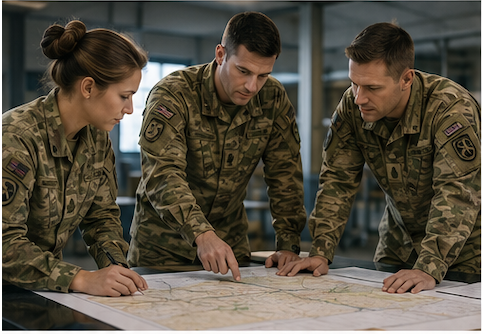
You’ve planned activities where safety was critical.
You’ve assessed risks before carrying out tasks.
You’ve worked within systems designed to protect people.
You’ve communicated clearly under pressure.
You’ve led teams, supported colleagues and accepted responsibility for the wellbeing of others.
None of those skills disappear the day you leave the Armed Forces.
They’re carried with you into civilian life.
Health and safety is built on many of those same principles.
It’s about thinking ahead, identifying potential risks before they become problems and making decisions that protect people while allowing organisations to operate effectively. It’s about leadership, communication and professional judgement just as much as it is about legislation and procedures.
One of the things I’ve always admired about military personnel is their ability to remain calm when circumstances become challenging. That ability to assess a situation, gather information and make sensible decisions under pressure is something every good Health and Safety Advisor relies on throughout their career.
Discipline is another strength that shouldn’t be underestimated.
The military develops habits that employers value enormously: professionalism, reliability, attention to detail and personal accountability. Those qualities build trust, and trust is one of the most important assets a Health and Safety Advisor can have.
Of course, there will be new things to learn.
Civilian legislation, industry standards and recognised qualifications all form part of the transition. But learning those things is very different from learning how to lead people or make sound decisions. In many respects, you’ve already mastered the more difficult part.
What you’re really doing is adapting existing skills to a new environment.
That’s an important shift in perspective.
You’re not starting again.
You’re building on years of experience that have already shaped the way you think, work and lead others.
When I look back over the people I’ve trained, some of the most effective health and safety professionals I’ve met have been former members of the Armed Forces.
Not because of the uniform they once wore.
But because of the values, professionalism and commitment they carried with them long after they left it behind.
The Skills You’ve Already Developed
One of the biggest mistakes I see service leavers make is underestimating the value of the skills they’ve developed during their military career.
That’s understandable.
When you’ve spent years in the Armed Forces, many of those skills become second nature. You stop thinking of them as specialist abilities because they’ve simply become part of the way you work.
The challenge comes when you begin looking at civilian job descriptions.
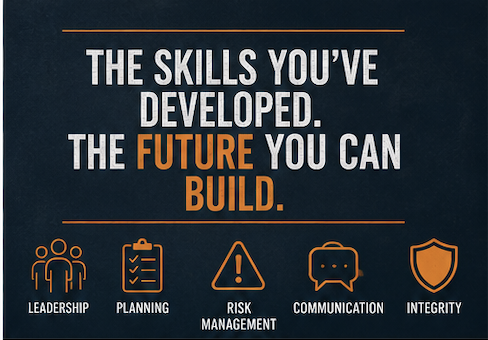
You read terms such as leadership, risk management, communication, planning and stakeholder engagement and assume employers are looking for something completely different.
In reality, you’ve probably been demonstrating those qualities for years.
Leadership is perhaps the most obvious example.
Whether you’ve been responsible for a small team or managed larger groups of personnel, you’ll understand how to motivate people, communicate expectations clearly and maintain high standards. Those are exactly the qualities employers expect from Health and Safety Advisors who need to influence people across every level of an organisation.
Risk management is another area where military experience transfers naturally.
Throughout your service, you’ve been trained to identify hazards, assess potential consequences, consider control measures and make informed decisions before work begins. Although the environments may change, the thought process remains remarkably similar.
Planning is equally valuable.
Successful military operations rely on preparation, coordination and attention to detail. Health and safety professionals approach their work in much the same way. Whether planning a construction project, reviewing a contractor’s method statement or developing safe systems of work, careful planning is at the heart of preventing incidents and protecting people.
Communication is another strength that employers consistently value.
In health and safety, your ability to explain complex information clearly can often be just as important as your technical knowledge. You’ll need to speak with site operatives, supervisors, senior managers, contractors and clients, adapting your communication style to suit each audience. If you’ve spent your career briefing teams, delivering instructions or coordinating activities under pressure, you’ll already appreciate the importance of clear, confident communication.
Then there are the qualities that don’t always appear on a CV but make an enormous difference in the workplace.
Professionalism.
Integrity.
Reliability.
Accountability.
The ability to remain calm under pressure.
The willingness to lead by example.
These are characteristics that can’t be taught in a classroom, yet they’re often the very qualities that earn respect and build trust within an organisation.
When I speak to employers, they rarely tell me they’re looking for someone who knows every regulation by heart.
They tell me they’re looking for someone they can trust.
Someone who communicates well.
Someone who makes sensible decisions.
Someone who remains professional when situations become challenging.
Those qualities have been part of military life for generations.
The qualification helps you understand civilian health and safety.
Your military experience provides the character and judgement to apply that knowledge effectively.
That’s a combination employers value far more than many service leavers realise.
Qualifications That Help You Transition
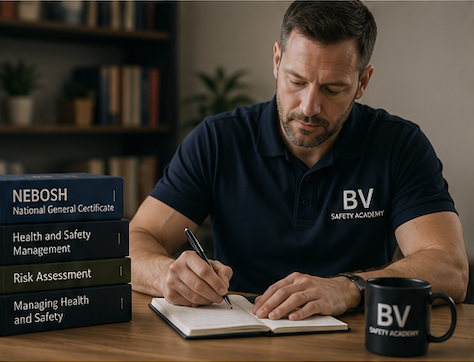
Once you’ve recognised how many of your existing skills transfer into health and safety, the next step is developing the industry knowledge and qualifications that employers expect to see.
For many Armed Forces service leavers, this is where the transition really begins.
The good news is that you’re not learning how to lead people, assess risk or make decisions under pressure. You’ve already developed those skills throughout your military career.
What you’re learning is how those same principles apply within civilian workplaces.
For most people entering the profession, the NEBOSH National General Certificate is the qualification I recommend first.
There are several reasons for that.
It’s recognised by employers across the UK and internationally, making it one of the strongest foundations for anyone looking to build a career in health and safety. More importantly, it provides a broad understanding of health and safety management that can be applied across almost every industry, whether your future lies in construction, manufacturing, engineering, logistics, facilities management or the public sector.
One of the things I often tell service leavers is not to be intimidated by returning to study.
It’s perfectly normal to feel apprehensive if you’ve been away from formal education for a number of years.
I’ve taught countless learners who felt exactly the same.
Many arrived convinced they weren’t academic enough or worried they wouldn’t cope with the assessment. Within a few days, they realised that success wasn’t about having the best memory.
It was about understanding the principles.
That’s something military personnel are often very good at.
Throughout your service you’ve learned procedures by understanding why they exist, not simply by memorising them. Health and safety works in much the same way. Once you understand the reasoning behind good practice, applying it becomes far more natural.
As your career develops, you may choose to specialise further.
Some professionals move into construction health and safety, others develop expertise in fire safety, occupational health, environmental management or consultancy. The important thing is not to worry about every future qualification before you’ve completed your first one.
Build strong foundations.
Gain experience.
Continue learning.
That’s the approach I’ve always encouraged because it creates confident professionals rather than people who simply collect certificates.
Remember, qualifications don’t replace the experience you’ve gained in the Armed Forces.
They translate it into a language that civilian employers immediately recognise.
Combined with your leadership, discipline and operational experience, they become a powerful platform for building a successful second career.
For many service leavers, the qualification is simply the bridge between the career they’ve completed and the career they’re about to begin.
What Employers Are Really Looking For

One of the biggest misconceptions among service leavers is that employers are searching for someone who ticks every box on a job description.
In reality, that’s rarely how recruitment works.
Of course, qualifications matter. Experience matters too. But when employers are looking to recruit a Health and Safety Advisor, they’re often looking beyond the CV. They’re asking themselves a much more important question.
“Can I trust this person?”
Trust sits at the heart of every successful health and safety role.
The people responsible for protecting others need to be dependable, professional and capable of making sound decisions, particularly when situations become challenging. Those qualities can’t be demonstrated by a certificate alone. They’re developed through experience, personal values and the way someone approaches their work.
This is one of the reasons I believe Armed Forces service leavers have so much to offer.
Throughout military service, trust isn’t something that’s earned overnight. It’s built through consistency, reliability and accountability. You learn that your actions affect the people around you, and that decisions often need to be made calmly, professionally and with the wider team in mind.
Those same qualities are highly valued in civilian organisations.
Employers are also looking for people who can communicate effectively.
A Health and Safety Advisor needs to work with people at every level of an organisation. One moment you might be speaking to someone working on the shop floor, the next you could be presenting recommendations to senior management. Being able to adapt your communication style, explain your reasoning clearly and build positive working relationships is every bit as important as understanding legislation.
Another quality employers value is practical judgement.
Health and safety isn’t about quoting regulations at every opportunity. It’s about understanding how work is carried out, recognising where things could go wrong and helping people find sensible, workable solutions that protect both individuals and the organisation.
That’s where military experience often provides an advantage.
You’ve already spent years assessing situations, considering risks and making decisions under pressure. The environment may be different, but the thought process is remarkably familiar.
Perhaps the most important quality of all is attitude.
Every employer wants people who are willing to learn, develop and contribute positively to their organisation. Qualifications can be gained, and experience grows with time, but a positive attitude, professional standards and a genuine desire to help others are qualities that employers consistently value.
I’ve interviewed and worked with many people throughout my career, and one thing has always stood out.
The strongest candidates aren’t necessarily the ones with the longest list of qualifications.
They’re the ones who demonstrate professionalism, integrity and a willingness to keep learning.
Those qualities leave a lasting impression.
And if you’ve developed them during your military career, you’re already bringing something incredibly valuable to the profession.
The qualification may help you secure the interview.
Your character is often what secures the opportunity.
What I Wish I’d Known When I Left the Army
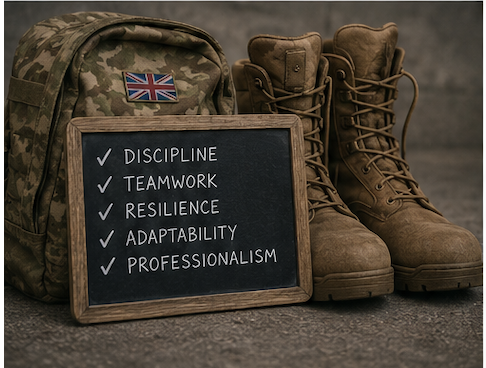
If I could sit down with my younger self on the day I left the Army, I don’t think we’d spend much time talking about qualifications.
I’d probably talk about confidence.
Like many people leaving the Armed Forces, I underestimated what I had to offer. I’d spent years working in an environment where leadership, discipline, planning and teamwork were simply part of everyday life. They weren’t things I thought about because they were normal. It never occurred to me that employers would see those qualities as strengths because I’d never had to describe them before.
That’s one of the biggest challenges service leavers face. You’re so used to doing the job that you don’t always recognise the value of what you’ve been doing. It takes time to realise that the decisions you’ve made, the responsibility you’ve carried and the people you’ve led have all shaped you into someone with skills that organisations genuinely need. Looking back now, I also wish I’d understood that it was perfectly acceptable not to have all the answers.
Leaving the military can feel like stepping into an unfamiliar world. New industries, new terminology and different ways of working can sometimes make you question whether you’ve made the right decision.
Those feelings are completely normal. They don’t mean you’re unprepared.
They simply mean you’re entering a new chapter of your life.
One of the things that helped me most was accepting that I didn’t have to prove myself on the first day. I just had to keep learning.
Every conversation taught me something.
Every course added another piece to the puzzle.
Every new challenge built a little more confidence.
Looking back, I realise that my military career hadn’t ended. It had prepared me for what came next.
Health and safety gave me an opportunity to continue doing something I’d always valued.
Helping people.
Protecting people.
Leading people.
The environment had changed, but the purpose hadn’t.
If you’re approaching the end of your service, I’d encourage you not to focus on everything that’s unfamiliar.
Instead, take a moment to recognise everything you’ve already achieved.
The leadership you’ve demonstrated.
The responsibility you’ve accepted.
The resilience you’ve developed.
The standards you’ve maintained.
Those things don’t disappear when you hand back your uniform. They become part of who you are. The next chapter of your career won’t ask you to become someone different. It will simply ask you to apply those qualities in a different environment.
Believe in your experience.
Be prepared to keep learning.
One Final Piece of Advice
If you’ve read this guide because you’re preparing to leave the Armed Forces, I’d like to leave you with one final thought.
Don’t judge your future by what you haven’t done.
Judge it by everything you’ve already achieved.
One of the biggest challenges when leaving military service is learning to recognise your own value in a completely different environment. You’ve spent years surrounded by people who understand the language, the structure and the responsibilities that come with military life. Stepping into civilian employment can make it feel as though you’re starting again.
You’re not.
You’re taking years of leadership, discipline, teamwork, planning and professional judgement into a new chapter of your career.
The challenge isn’t developing those qualities.
The challenge is believing they matter.
I genuinely believe health and safety is one of the professions where military experience is most naturally recognised. It values people who think before they act, who remain calm under pressure, who understand responsibility and who genuinely care about protecting others.
Those qualities can’t be taught overnight. You’ve spent years developing them.
The qualifications you gain after leaving the Armed Forces don’t replace that experience. They simply help civilian employers understand it.
If you’re still unsure whether health and safety is the right career for you, my advice is simple.
Talk to people already working in the profession.
Ask questions.
Visit workplaces.
Find out what the role is really like rather than relying on assumptions.
The more you learn, the more confident your decision will become.
And remember this.
No one leaves the Armed Forces with all the answers.
We all start the next chapter with questions. What matters is having the confidence to take that first step.
Looking back, I don’t think the best decision I made after leaving the Army was choosing a particular qualification or accepting a particular job.
It was deciding to keep moving forward. Everything else followed from that.
So, if you’re standing at the beginning of your own transition, don’t focus on what you’re leaving behind.
Focus on what you’re taking with you.
Your experience.
Your values.
Your professionalism.
Your resilience.
Those qualities have already been earned. Now it’s time to put them to work in a new way. Your military career has shaped who you are. It doesn’t define what you’re capable of becoming.
And if health and safety is the path you choose, I think you’ll discover something many of us have already learned. Looking after people never stops being worthwhile. It simply takes on a different uniform.
One day you’ll look back, just as I do now, and realise that leaving the Army wasn’t the end of your journey. It was the beginning of another one.
Ready to Take the Next Step?
Whether you’re starting your health and safety journey or looking to progress your career, we’re here to help.
📞 01494 864100
✉ info@bvassociates.co.uk

