By Dean Ferguson, CEO BV Associates Limited
At BV Associates, we’ve supported organisations across the UK for over 20 years with risk assessments, COSHH assessments, NEBOSH and IOSH training, and hands-on consultancy. One challenge we often hear from learners is the “language barrier” of health and safety. Technical words, legal phrases, and acronyms can make safety feel complex — when really, it’s about keeping people safe and businesses compliant.
That’s why I’ve created this plain-English glossary of health and safety terms, with examples for each one. Think of this as a training-friendly dictionary you can return to whenever you need clarity. Whether you’re starting your first NEBOSH course, supervising a team, or managing compliance for a business, this guide is here to help.
A
Absence rate
The percentage of working hours lost due to unplanned absences such as sickness.
Example: If 120 hours are lost out of 4,000 in a month, the absence rate is 3%.
Absenteeism
When an employee regularly misses work without valid reasons (different from genuine sickness).
Example: A worker repeatedly skipping shifts without reporting in.
Absorption
When a chemical or substance enters the body through the skin, eyes, or cuts.
Example: Handling cleaning chemicals without gloves may allow harmful absorption.
Acceptable risk
A risk reduced to a level where it is unlikely to cause serious harm.
Example: A noisy workshop where ear defenders reduce exposure to a safe level.
Accident
An unplanned event that causes injury, illness, or property damage.
Example: A fall from a ladder resulting in a broken ankle.
Accident frequency rate
The number of accidents per 100,000 hours worked.
Example: If 4 accidents happen during 200,000 hours worked, the AFR is 2.
Accident incidence rate
The number of accidents per 1,000 employees.
Example: A company with 500 employees and 5 accidents has an AIR of 10.
Acute toxicity
The harmful effects caused by a single exposure to a toxic substance.
Example: Inhaling high levels of carbon monoxide leading to unconsciousness.
Administrative controls
Policies, rules, or work practices that reduce risk.
Example: Rotating shifts to limit exposure to loud noise.
Airborne
Particles like dust, fumes, or smoke suspended in the air.
Example: Asbestos fibres released during building work.
Allergen
A substance that triggers an allergic reaction.
Example: Latex gloves causing skin rashes for some workers.
ALARP (As Low As Reasonably Practicable)
Reducing risk as much as is reasonably possible.
Example: Installing machine guards and providing PPE, even though risk can’t be eliminated entirely.
Audit
A systematic review of processes to check compliance and performance.
Example: A health and safety audit of a construction site.
B
Benchmarking
Comparing safety performance against legal or industry standards.
Example: Checking accident rates against national averages.
Beyond compliance
Going further than the law requires to improve wellbeing.
Example: Providing mental health training even when not legally required.
Business continuity
Planning to keep operations running during disruptions.
Example: Having backup systems to continue working during a power outage.
C
Civil law
Law that resolves disputes between individuals or organisations.
Example: An employee claiming compensation for workplace injury.
Competence
Having the skills, knowledge, and experience to perform safely.
Example: A qualified electrician carrying out electrical work.
Confined space
An enclosed area with risks like lack of oxygen or hazardous gases.
Example: A storage tank that requires special entry procedures.
Consultation
Discussing health and safety matters with staff.
Example: Holding regular safety committee meetings.
Continual improvement
Ongoing efforts to enhance safety performance.
Example: Regularly updating risk assessments to reflect new hazards.
Corrective action
Steps taken to fix the cause of an incident or non-compliance.
Example: Installing guards after an accident with an unprotected machine.
Cost-benefit analysis
Weighing up the cost of controls against the level of risk reduction.
Example: Installing fire doors to prevent large losses from potential fires.
Criminal law
Law enforced by the state to punish unsafe practices.
Example: The HSE prosecuting a company for serious breaches.
Culture
“The way we do things here” — shared workplace values and attitudes.
Example: A culture where staff report near-misses without fear of blame.
D
Dangerous Occurrence
A failure of equipment, plant, or process containment that could cause harm but does not result in injury. Many “near-miss” type events fall under this.
Example: A crane drops a load due to a mechanical failure, but no one is injured.
Display Screen Equipment (DSE)
Workstations that use screens, such as computers, tablets, or control panels. Prolonged or poorly set-up DSE can cause musculoskeletal disorders, headaches, and eye strain.
Example: An office worker develops neck pain due to an incorrectly positioned monitor.
Dignity and Privacy
In health and social care, this refers to respecting service users by maintaining personal boundaries and ensuring individuals are treated with respect and confidentiality.
Example: A care worker ensures a resident is covered while being assisted with personal hygiene.
Disability Discrimination
Unfair treatment of employees because of a disability, which is unlawful under the Equality Act 2010. Employers must make “reasonable adjustments.”
Example: Providing a height-adjustable desk for a worker with a mobility impairment.
Dynamic Risk Assessment (Point of Work)
An on-the-spot risk assessment carried out when work conditions change rapidly, requiring new control measures.
Example: A site supervisor halts work when weather conditions suddenly deteriorate and reassesses working-at-height procedures.
E
Elimination
The most effective control in the Hierarchy of Control — physically removing the hazard so it no longer poses a risk.
Example: Designing machinery to operate automatically so workers no longer need to enter a dangerous area.
Emergency Plan
A structured set of instructions for responding to workplace emergencies such as fires, chemical spills, or medical incidents.
Example: A factory’s emergency plan outlines evacuation routes, fire marshal roles, and first aid stations.
Engineering Controls
Physical changes or barriers built into the workplace or equipment to isolate people from hazards.
Example: Installing machine guards or fume extraction systems.
Environmental Management (linked to ESG)
Part of the ESG framework focusing on reducing negative environmental impacts such as emissions, waste, and pollution.
Example: A company introduces recycling stations and reduces packaging waste.
Environmental, Social & Governance (ESG)
A framework for measuring sustainability and ethical business practices. Health & Safety is a key part of the “Social” and “Governance” pillars.
Example: Reporting accident frequency rates as part of an ESG disclosure.
Ethical Business Practices
Operating in ways that are fair, transparent, and socially responsible, including how workers’ health and safety is prioritised.
Example: Refusing to cut corners on PPE procurement even if it costs more.
Ergonomics
The science of designing tasks, equipment, and environments to suit human needs and capabilities.
Example: Adjustable chairs and desks to prevent repetitive strain injuries.
F
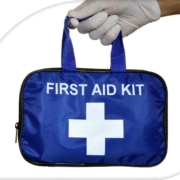
First Aid
The immediate help given to a person who is injured or unwell before professional medical assistance arrives. The aim is to preserve life, prevent deterioration, and promote recovery.
Example: Administering CPR to a worker who has collapsed from cardiac arrest.
Foreseeability
The concept that an event or hazard could reasonably be predicted. Important in law and risk assessments.
Example: It’s foreseeable that leaving a spill on a shop floor could lead to a slip accident.
Frequency Rate (Accident Frequency Rate)
The number of workplace accidents per 100,000 employee hours worked. Used to benchmark performance.
Example: A construction company calculates its accident frequency rate to monitor safety improvements year-on-year.
Fire Risk Assessment
A legal requirement in workplaces to identify fire hazards, people at risk, and control measures.
Example: Reviewing escape routes and extinguisher locations in an office block.
Fall Prevention (Working at Height)
Controls put in place to stop workers falling from a height — part of the Hierarchy of Control.
Example: Installing guardrails around scaffolding edges.
Fatigue
A state of extreme tiredness that reduces alertness and increases the risk of accidents.
Example: A lorry driver exceeds safe driving hours and causes a collision due to fatigue.
Fire Marshal (Warden)
A trained employee responsible for leading evacuations and supporting fire safety in the workplace.
Example: A fire marshal ensures their department exits safely during an evacuation drill.
G
Governance
The way an organisation is directed and controlled through policies, processes, and leadership. Good governance shows that health and safety is a core business priority, not an afterthought.
Example: A board of directors receives quarterly health and safety reports and ensures corrective actions are completed.
Good Practice
Widely recognised methods of managing safety that go beyond minimum legal compliance. These approaches are proven to reduce risk and improve wellbeing.
Example: A construction company adopting digital permit-to-work systems to improve oversight and reduce paperwork errors.
Good Samaritan Principle
Helping in an emergency without fear of legal repercussions if the response was reasonable and in good faith.
Example: An office worker using CPR on a collapsed colleague and being legally protected even if the outcome is unsuccessful.
Good Work Design
Designing jobs, tools, and environments to minimise risks and improve worker wellbeing.
Example: A warehouse redesigns packing stations at waist height to reduce back injuries and improve efficiency.
Governance, Risk and Compliance (GRC)
An integrated system that brings together governance, risk management, and compliance to ensure safe, legal, and effective operations.
Example: A manufacturing firm using GRC software to track audits, risk assessments, and HSE compliance in one place.
Graduated Enforcement
The step-by-step approach regulators take, starting with advice and escalating to notices, fines, or prosecution depending on the seriousness of breaches.
Example: The HSE issues an improvement notice for poor machine guarding, escalating to prosecution when no action is taken.
Gross Negligence
A serious failure to take reasonable care, showing reckless disregard for safety. This can lead to prosecution or even manslaughter charges if fatalities occur.
Example: A director knowingly allowing workers onto fragile roofs without fall protection.
Grounds for Dismissal (Safety Context)
When repeated or serious safety breaches put others at risk, dismissal can be lawful.
Example: A forklift driver repeatedly driving recklessly despite training and warnings.
Guarding (Machine Safety)
Physical barriers or interlocked devices that protect workers from dangerous parts of machinery.
Example: A meat-cutting machine fitted with an interlocked guard that automatically stops the blade when opened.
Guidance (HSE Context)
Official advice from the Health and Safety Executive (HSE) on how to meet legal duties. While not law itself, courts often view it as the benchmark for what’s “reasonably practicable.”
Example: An employer following HSE guidance on asbestos management when planning maintenance work.
Gypsum Dust (Specific Hazard)
Dust created when cutting or sanding plaster and drywall, which can irritate the lungs and eyes. Controls under COSHH are required.
Example: Drywall installers using dust extraction systems and RPE to control gypsum exposure.
H
Hazard
Anything with the potential to cause harm, whether to people, property, or the environment.
Example: A trailing electrical cable across a walkway is a trip hazard.
Health Screening
Health checks aimed at detecting signs of illness or conditions that could be linked to workplace exposures.
Example: Hearing tests offered to employees working with loud machinery to check for early signs of hearing loss.
Health Surveillance
A more formal and ongoing system for monitoring employees’ health where they are exposed to specific risks. Required by law in some situations.
Example: Regular lung function testing for workers exposed to respirable crystalline silica (RCS).
Health & Safety Committee
A joint group of workers and management who meet to discuss workplace safety issues and improvements.
Example: A warehouse safety committee reviewing incident reports and proposing changes to manual handling training.
Heat-Related Illness
Conditions caused by the body overheating, often due to high temperatures or poor hydration. Symptoms range from heat exhaustion to life-threatening heat stroke.
Example: A construction worker collapsing during a heatwave due to prolonged work without breaks in shade.
Hierarchy of Control (HOC)
A structured method for controlling risks, ranking controls from most effective (elimination) to least effective (PPE).
Example: Instead of relying solely on ear defenders, a factory installs quieter machinery to reduce noise at source.
Horizon Scanning
Looking ahead to anticipate future risks, hazards, or changes in the working environment.
Example: An employer considering how AI and automation could create new safety risks in logistics warehouses.
Human-Centred Approach
Designing work, systems, and policies with the worker in mind, making tasks safer and more efficient.
Example: Adjusting factory line speeds to suit workers’ physical capabilities and reduce repetitive strain.
Human Factors
The study of how humans interact with equipment, tasks, and environments, and how errors can be prevented by better design.
Example: Installing colour-coded controls on machinery to reduce the chance of operator mistakes.
Human Reliability
The likelihood that a person can perform a task correctly and consistently. No one is 100% reliable, so systems must be designed to tolerate human error.
Example: Adding a safety interlock to a machine so it cannot start until the guard is closed, even if the operator forgets.
I
Incident
Any unplanned event that results in or could have resulted in injury, ill-health, or damage.
Example: A spillage that almost caused a slip is an incident, even if no one fell.
Inspection
A planned check of the workplace to identify hazards and ensure compliance with procedures.
Example: A weekly ladder inspection to check for damage before use.
Investigation
The process of finding the root cause of an incident so lessons can be learned and improvements made.
Example: After a forklift collision, an investigation reveals poor traffic segregation in the yard.
K
Key Performance Indicators (KPIs)
KPIs are measurable values that track how effectively an organisation is meeting its health and safety objectives. They can be proactive (leading) or reactive (lagging).
Example: A company sets a KPI of “100% of staff to complete mandatory safety training by Q2” and tracks progress monthly.
Kickback (Machinery Hazard)
A sudden reaction where a tool or machine forcefully pushes material — or itself — back towards the operator. This can cause serious injuries if not controlled.
Example: A circular saw binding in timber and violently jerking back towards the user.
Kill Zone (High-Risk Area)
An area around machinery or vehicles where workers are at risk of serious injury or death if struck or trapped. These zones must be controlled and restricted.
Example: The swing radius of a crane is marked as a “no entry” kill zone on site plans.=
Knowledge Check
A short assessment used in training to confirm understanding of key health and safety principles. This supports competence and highlights areas for improvement.
Example: After a COSHH training session, learners complete a 10-question knowledge check on safe chemical handling.
Knowledge Transfer
The process of sharing safety expertise and lessons learned across teams, shifts, or organisations to prevent incidents and improve performance.
Example: A supervisor documents a near-miss and briefs the next shift, preventing the same hazard from being repeated.
Known Hazard
A hazard that has already been identified through risk assessments, industry data, or previous incidents. Employers have a duty to act on known hazards.
Example: A factory knows that forklift-pedestrian collisions are a risk and installs barriers to keep walkways separate.
L
Lagging Indicators
Measures of past performance, often accident or incident data.
Example: The number of slips and trips recorded last year.
Leading Indicators
Proactive measures showing how well safety systems are functioning.
Example: Percentage of staff completing mandatory safety training on time.
Legal Framework
The system of laws, regulations, and enforcement that govern workplace health and safety.
Example: In the UK, the Health and Safety at Work Act 1974 forms the foundation of the legal framework.
Legionella
Bacteria that cause Legionnaires’ disease, a severe form of pneumonia, often found in stagnant water systems.
Example: A poorly maintained air-conditioning system allows Legionella to grow, putting staff and visitors at risk.
Legislation
The laws passed by Parliament that set health and safety standards employers must follow.
Example: The Manual Handling Operations Regulations 1992 set rules for safe lifting at work.
Likelihood
A judgement of how probable it is that a hazard will cause harm, usually assessed during risk assessment.
Example: The likelihood of a fall increases if ladders are used on uneven ground.
Lost-Time Injury (LTI)
An accident or illness that causes an employee to miss at least one full working day.
Example: A warehouse worker sprains an ankle and is off work for two weeks — counted as a lost-time injury.
Lone Working
Working without direct supervision, which can increase risk.
Example: A security guard patrolling a site alone at night.
M
Management System
A structured framework of policies, procedures, and responsibilities used to control risks and improve safety performance.
Example: An organisation implements ISO 45001 to ensure safety management is embedded into all operations.
Manual Handling
Any task that involves lifting, carrying, pushing, pulling, or moving a load by hand or bodily force. Poor technique can cause musculoskeletal injuries.
Example: A warehouse worker strains their back lifting heavy boxes without proper equipment.
Medical Surveillance
Ongoing health checks carried out by occupational health professionals to detect early signs of work-related illness.
Example: Regular lung function tests for workers exposed to silica dust.
Method Statement
A step-by-step written description of how a task will be performed safely. It’s often paired with a risk assessment.
Example: A construction contractor prepares a method statement detailing how scaffolding will be erected safely.
Musculoskeletal Disorder (MSD)
Injuries or conditions affecting muscles, joints, tendons, or ligaments caused by repetitive strain, awkward postures, or heavy lifting.
Example: An office worker develops carpal tunnel syndrome from prolonged keyboard use.
Monitoring (Proactive and Reactive)
The process of checking whether safety systems are working effectively. Proactive monitoring looks at prevention; reactive monitoring responds after incidents.
Example: A safety officer carries out a monthly site inspection (proactive) and reviews accident reports (reactive).
Moral Duty of Care
The ethical responsibility employers have to protect the health, safety, and wellbeing of their employees beyond just legal requirements.
Example: A company offers stress-management support even though it isn’t legally mandated.
N
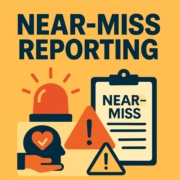
Near Miss
An event that could have caused harm but didn’t — often a warning sign of underlying hazards.
Example: A worker narrowly avoids being struck by a falling tool from scaffolding.
Noise-Induced Hearing Loss (NIHL)
Permanent and irreversible damage to hearing caused by prolonged exposure to loud noise levels.
Example: Factory workers without ear protection develop long-term hearing issues from constant machinery noise.
Normal Operating Procedures (NOPs)
Written instructions outlining how to carry out routine tasks safely and efficiently.
Example: A chemical plant uses NOPs to ensure equipment is always started and shut down in the correct order.
Notifiable Incident
An accident, dangerous occurrence, or case of occupational disease that must be formally reported to the regulator (e.g., RIDDOR in the UK).
Example: A workplace fracture caused by a fall from height must be reported under RIDDOR.
Noxious Substance
Any substance harmful to health if inhaled, ingested, or absorbed through the skin.
Example: Carbon monoxide from faulty boilers can cause poisoning and death.
Nuclear Safety
Measures to prevent accidents involving radioactive materials, reactors, or radiation exposure.
Example: A power station enforces strict radiation monitoring for staff working near reactor cores.
Nuisance Dust
Airborne dust particles that are not highly toxic but can still cause discomfort and long-term respiratory problems if inhaled regularly.
Example: A joinery workshop produces nuisance dust from sanding wood, controlled with local exhaust ventilation.
Example: Factory workers exposed to machinery noise over years.
O
Occupational Disease
A recognised illness or medical condition directly caused by workplace activities or exposures, often listed in UK legislation such as RIDDOR.
Example: A welder develops occupational asthma from inhaling metal fumes.
Occupational Exposure Limits (OELs / WELs in the UK)
Known in the UK as Workplace Exposure Limits (WELs) under the COSHH Regulations, these are the maximum levels of hazardous substances allowed in workplace air.
Example: Employers must monitor dust exposure in woodworking to ensure it stays below the WEL for hardwood dust.
Occupational Health (OH)
A UK workplace service that promotes employee wellbeing, prevents illness, and helps workers return after sickness absence. Often includes health surveillance required by law.
Example: A company provides hearing tests for staff exposed to noise under the Control of Noise at Work Regulations.
Occupational Health and Safety Management System (OHSMS)
A formal UK system (e.g., ISO 45001) to manage risks, comply with the Health and Safety at Work Act 1974, and continually improve standards.
Example: A construction firm introduces ISO 45001 to demonstrate compliance and reduce incident rates.
Occupational Safety and Health (OSH)
The collective UK approach to preventing work-related injuries, illnesses, and deaths, promoted through legislation such as the Health and Safety at Work Act and enforced by the HSE.
Example: A retail chain implements OSH policies on manual handling and slips to protect staff and customers.
Occupational Stress
Work-related stress recognised by the HSE as a hazard that must be managed like any other workplace risk.
Example: An NHS trust develops a stress management policy after staff surveys reveal high pressure and burnout.
Occupational Road Risk (ORR)
The risk of harm to employees when driving for work purposes. A major area of UK health and safety, as road accidents are a leading cause of work-related fatalities.
Example: A delivery company introduces defensive driving training to manage occupational road risk.
Occupational Hygiene
A UK discipline focusing on the anticipation, recognition, evaluation, and control of hazards in the workplace environment.
Example: An occupational hygienist measures solvent vapour levels in a spray-painting workshop.
P
Permit to Work (PTW)
A written authorisation system to control high-risk work such as hot works, electrical isolation, or confined space entry. Ensures risks are assessed, controls are in place, and only competent people carry out the task.
Example: Contractors must obtain a permit before carrying out welding on a petrochemical site.
Personal Protective Equipment (PPE)
Equipment or clothing designed to protect workers when hazards cannot be controlled by other means. Required under the PPE at Work Regulations 1992 (amended 2022).
Example: Eye protection is mandatory for staff cutting metal in a fabrication workshop.
Point of Work / Dynamic Risk Assessment
A quick check carried out on site before starting work, to identify new or changing risks not covered in a formal risk assessment.
Example: A delivery driver spots slippery ground at a customer’s site and changes unloading methods to stay safe.
Policy (Health & Safety Policy)
A written statement of intent setting out how an organisation manages health and safety, required by law if the employer has five or more staff.
Example: A care home updates its health and safety policy annually, adding new sections on infection control.
Precautionary Principle
A principle applied when scientific certainty is lacking but there is potential for harm. In UK safety practice, this means acting early rather than waiting for proof.
Example: A lab switches to a less harmful cleaning agent ahead of updated COSHH guidance.
Presenteeism
When employees work despite being unwell, leading to reduced performance and sometimes greater health risks.
Example: An employee with back pain attends work but makes errors and aggravates their injury.
Preventive Measures
Controls introduced to stop accidents and ill-health before they happen, following the hierarchy of control.
Example: Installing machine guards prevents workers’ hands entering dangerous moving parts.
Proactive Monitoring
Checking safety systems regularly to ensure they work, before an accident occurs.
Example: Weekly fire alarm tests and safety walks by managers.
Procedure
A formal step-by-step instruction on how to complete a task safely.
Example: A written procedure for handling and disposing of sharps in a hospital.
Protective Systems
Measures designed to minimise the effect of hazards that cannot be removed.
Example: Explosion relief panels installed in chemical plants to protect workers if containment fails.
Prohibition Notice
Issued by the HSE or Local Authority Inspector when they believe an activity poses a risk of serious personal injury. Work must stop immediately until the issue is resolved.
Example: An inspector serves a prohibition notice on scaffolding deemed unsafe for workers to use.
Public Liability (Insurance)
Covers an organisation if members of the public are injured or suffer property damage due to business activities. Not a substitute for health and safety compliance but part of overall risk management.
Example: A shop relies on its public liability insurance when a customer slips on a wet floor, but also reviews cleaning procedures to prevent repeat incidents.
PUWER (Provision and Use of Work Equipment Regulations 1998)
UK regulations that require all work equipment to be suitable, maintained, and used safely. Employers must ensure workers are trained and equipment is inspected.
Example: A warehouse manager ensures forklift trucks are regularly serviced and operators trained under PUWER requirements.
Q
Qualitative Risk Analysis
Using professional judgement, physical evidence, and experience to assess the likelihood and severity of risks without relying on numerical data.
Example: A site manager judges the likelihood of slips in a kitchen by observing wet floors and worker behaviour rather than statistical models.
Quantitative Risk Analysis
The use of numerical data, calculations, and statistical methods to measure the probability and potential impact of risks.
Example: A chemical plant uses exposure data and dose-response models to calculate the exact probability of respiratory illness from airborne substances.
Quarantine (Workplace Safety)
The temporary isolation of defective or unsafe equipment, materials, or products until they can be repaired, replaced, or disposed of safely.
Example: A batch of electrical tools with frayed wiring is quarantined in a locked cage to prevent use until repaired or replaced.
Quality Assurance (in Health & Safety Training/Systems)
Processes that ensure safety management systems, training, and assessments meet required standards consistently. Linked to ISO standards and NEBOSH/IOSH accredited training centre requirements.
Example: BV Associates’ NEBOSH course materials undergo regular quality assurance checks to ensure compliance with awarding body requirements.
Quasi-Legal Guidance
Guidance published by bodies like the HSE that, while not strictly law, has strong legal influence. Courts often use it as a benchmark for what a “reasonable employer” should do.
Example: Following the HSE’s Approved Codes of Practice (ACOPs) on COSHH, which are not legislation but carry legal weight in enforcement cases.
Questionnaire (Health & Safety Surveys)
A structured tool used to gather information from workers about risks, hazards, or wellbeing. Often part of health surveillance or safety culture assessments.
Example: A construction company issues a questionnaire to site staff about near-miss reporting and safety communication effectiveness.
R
Reasonably Foreseeable / Foresight
A risk or hazard that could realistically occur, based on knowledge, industry practice, or historical evidence. Courts use “reasonable foreseeability” to decide liability.
Example: It is reasonably foreseeable that scaffolding left uninspected could collapse, so employers must take action.
Reasonably Practicable
The legal test requiring employers to balance the level of risk against the cost, time, and effort needed to control it. A cornerstone of UK health & safety law.
Example: Providing hearing protection for workers exposed to noise over 85 dB is reasonably practicable; installing soundproof walls for very low exposure is not.
Recovery Controls
Measures put in place to regain control after an incident occurs, limiting consequences rather than preventing the hazard.
Example: Having a sprinkler system to contain a fire is a recovery control, while storing chemicals safely is a preventive control.
Regulation
A statutory rule or directive made under an Act of Parliament. Regulations are legally binding and enforceable.
Example: The Control of Substances Hazardous to Health (COSHH) Regulations 2002 require employers to assess and control exposure to hazardous substances.
Residual Risk
The level of risk that remains after all reasonable controls have been applied.
Example: Workers wearing PPE against dust still face residual risk if masks are not perfectly fitted.
Respiratory Protective Equipment (RPE)
Specialist PPE that protects workers against airborne contaminants, such as dusts, fumes, vapours, or gases.
Example: A worker sanding hardwood uses a properly fitted FFP3 respirator to prevent inhalation of harmful dust particles.
Risk
The likelihood of harm occurring combined with the potential severity of that harm. Central to all health and safety assessments.
Example: The risk of falls on a wet office floor is “likely” with “moderate harm,” meaning urgent action (signage, cleaning, matting) is needed.
Risk Appetite
The amount and type of risk an organisation is prepared to tolerate in order to achieve objectives.
Example: A logistics company may have a low appetite for driver safety risks but a higher tolerance for IT downtime risk.
Risk Assessment
The overall process of identifying hazards, evaluating risks, and deciding on control measures. A legal duty under UK regulations.
Example: An employer completes a risk assessment for working at height, identifying hazards (fragile roofs), evaluating risks (likelihood of falls), and applying controls (guardrails, training).
Risk Control
The strategy or action taken to eliminate, reduce, transfer, or tolerate risk in line with an organisation’s policy and legal duty.
Example: Installing machine guards is a control to reduce risk of injury from moving parts.
Risk Evaluation
The step in the risk assessment process where severity and likelihood are weighed to determine whether existing controls are adequate.
Example: A risk matrix shows that “frequent exposure + serious injury potential” is intolerable, so extra controls are required.
Risk Identification
The process of spotting hazards that could lead to harm.
Example: Identifying trip hazards such as loose cables during a workplace inspection.
Risk Management
The systematic process of identifying, analysing, assessing, and controlling risks to keep them at acceptable levels.
Example: A construction firm uses a risk management system to control hazards from scaffolding, machinery, and manual handling.
Risk Profile
A summary view of the number, type, and seriousness of risks facing an organisation at a given time.
Example: A hospital’s risk profile highlights infection control as its highest safety priority.
Risk Register
A formal record documenting identified risks, their severity, likelihood, controls in place, and outstanding actions.
Example: A warehouse risk register logs fire, manual handling, and forklift hazards, with action owners assigned.
Risk Tolerance
The specific level of risk an organisation is prepared to accept before further controls are considered mandatory.
Example: A company may tolerate occasional IT downtime but will not tolerate any unguarded machinery risk.
Risk Treatment
The action plan for modifying risk, whether by removing, reducing, transferring (insurance), or tolerating it.
Example: A contractor substitutes a toxic paint for a water-based product to reduce health risks.
Root Cause
The fundamental underlying factor that triggered an incident, identified through investigation. Eliminating root causes prevents recurrence.
Example: The root cause of a fall from height may be “lack of edge protection,” not just “worker error.”
S
Safe Systems of Work (SSoW)
A structured way of planning and carrying out tasks to ensure hazards are identified and risks are controlled. It sets out step-by-step instructions.
Example: A safe system for welding includes isolating gas supplies, using PPE, and ensuring ventilation is in place before starting work.
Self-Assessment
An assessment carried out by an individual about their own working conditions, often required for office-based roles such as DSE (Display Screen Equipment).
Example: An employee completing a workstation self-assessment to check chair height, screen position, and lighting.
Significance
The level of importance attached to a risk or hazard in terms of its potential impact.
Example: A minor paper cut is not significant, whereas exposure to asbestos is highly significant due to long-term health risks.
Significant Risk
A risk that could reasonably lead to major harm if not controlled. Used in HSE inspections to prioritise enforcement.
Example: A construction site with open edges and no guardrails presents a significant risk of fatal falls.
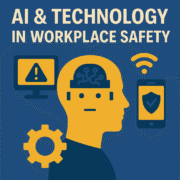
Smart Personal Protective Equipment (Smart PPE)
Traditional protective equipment enhanced with sensors or electronics to provide real-time monitoring.
Example: A hard hat fitted with a sensor that alerts supervisors if a worker suffers a fall.
Small and Medium-Sized Enterprise (SME)
A business with fewer than 250 employees and turnover below £50 million. SMEs must still comply with all relevant health and safety laws.
Example: A small plumbing firm with 10 employees still has to carry out COSHH assessments for chemical products used.
Standard
An agreed level of quality, safety, or performance. Standards may be set by legislation, regulators, or industry bodies.
Example: Following British Standards (BS EN 397) for protective helmets in construction.
Strategy
An organisation’s overall plan for achieving safety, business, or operational objectives.
Example: A company adopting a “Vision Zero” strategy to eliminate workplace accidents.
Stress
A mental or emotional strain caused by demanding circumstances. Work-related stress is a recognised risk under UK health and safety law.
Example: A call centre with unrealistic targets and no support systems may lead to stress-related illness among staff.
Substitution
Replacing a hazardous substance or process with something less harmful.
Example: Using water-based paints instead of solvent-based paints to reduce exposure to toxic vapours.
Sustainability
Creating working conditions that balance present needs with the needs of future generations. In health & safety, this means ensuring workers can remain in employment throughout their working lives.
Example: Investing in ergonomic equipment to reduce musculoskeletal injuries and extend careers.
Social Sustainability
Managing business impacts on people, both inside and outside the organisation. This covers fair treatment, worker wellbeing, and engagement.
Example: A company offering flexible working and mental health support to promote long-term employee wellbeing.
Safety Culture
The shared values, beliefs, and behaviours in a workplace that influence how safety is managed.
Example: A company where managers always wear PPE on site sets a visible example of positive safety culture.
Safety Committee (Health & Safety Committee)
A formal group of worker and employer representatives who meet to discuss safety issues and improvements.
Example: A hospital H&S committee meets monthly to review incident reports and new risks.
Safety Audit
A structured review of a workplace’s safety policies, procedures, and performance.
Example: A manufacturing site undergoing an annual audit to check compliance with PUWER and COSHH regulations.
Safety Training
Education and instruction given to workers to help them understand hazards, controls, and safe behaviour.
Example: Forklift drivers completing refresher training every three years.
Safety Data Sheet (SDS)
A legal document providing detailed safety information about a hazardous chemical or substance, required under UK REACH and COSHH law.
Example: An SDS for bleach outlining PPE requirements, first aid measures, and storage advice.
Safety Inspection
A proactive check of the workplace to identify hazards before they cause harm.
Example: Weekly site walk-arounds to ensure fire exits are clear and equipment is in good order.
Safe Person Concept
The idea that individuals must be trained and equipped to protect themselves where hazards cannot be fully eliminated.
Example: Lone workers trained in de-escalation techniques when dealing with aggressive members of the public.
Safety Signage
Signs used to warn, instruct, or guide people about health and safety in the workplace. Required under the Health and Safety (Safety Signs and Signals) Regulations 1996.
Example: “Danger – High Voltage” signs near electrical panels.
Safety Critical Work
Work where failure could result in serious injury, death, or catastrophic consequences.
Example: Railway signalling maintenance is safety-critical because errors could cause collisions.
T
Task-Based Risk Assessment
A specific risk assessment carried out for one job or task rather than the whole workplace. It helps identify hazards unique to that activity.
Example: Before scaffolding is erected, a task-based risk assessment is done to check for overhead power lines, ground stability, and fall risks.
Temporary Works
Engineering works that are needed to support or enable permanent construction but are not part of the finished structure. Temporary works often carry high risk if not properly designed or supervised.
Example: Scaffolding, excavation supports, or falsework to hold formwork for concrete until it sets.
Tolerable Risk
A level of risk that is low enough to be managed but not necessarily reduced to zero. It means the risk has been reduced “as low as reasonably practicable” (ALARP).
Example: Using guards on machinery reduces risks to a tolerable level, though not every small hazard can be eliminated.
Toolbox Talk
A short, focused safety briefing delivered to workers on-site, usually at the start of a shift or before a specific task.
Example: A five-minute talk before roofing work, reminding workers about fall arrest systems and ladder safety.
Training
Planned activities that give workers the knowledge and skills to carry out tasks safely. Training is a legal duty under the Health and Safety at Work Act 1974.
Example: Forklift operators receiving refresher training every three years.
Training Needs Analysis (TNA)
A method of identifying what health and safety training is required for different job roles.
Example: Office workers may only need DSE training, while construction supervisors require NEBOSH or IOSH-level training.
Transport Management Plan (TMP)
A plan that sets out how vehicles and pedestrians will move safely around a workplace or site.
Example: A construction site has a TMP showing separate routes for delivery lorries and pedestrian walkways.
Tripping Hazard
Any object, surface, or condition that could cause someone to trip and fall.
Example: Loose cables running across an office walkway are a tripping hazard.
Turnbull Guidance
Guidance on internal control and risk management for UK companies, originally issued in 1999 under the Combined Code on Corporate Governance. It remains a reference in safety risk governance.
Example: Boards of directors referring to Turnbull principles when reviewing health, safety, and ESG risks.
Toxic Substances
Chemicals or materials that can cause harm to human health if inhaled, ingested, or absorbed through the skin.
Example: Isocyanates used in spray paints can cause occupational asthma if proper controls are not in place.
Traffic Management
The control of vehicles, plant, and pedestrians in a workplace to prevent collisions.
Example: A warehouse introduces one-way forklift systems and marked pedestrian crossings.
Task Rotation
A system of alternating tasks among workers to reduce repetitive strain and fatigue.
Example: On a production line, workers rotate between packing, lifting, and machine monitoring to reduce musculoskeletal risks.
Thermal Stress (Heat or Cold Stress)
The strain placed on the body when working in hot or cold conditions.
Example: Road workers wearing high-vis PPE in summer are given shaded rest breaks and water to avoid heat stress.
Third-Party Audit
An independent health and safety audit carried out by an external organisation.
Example: A logistics company hires BV Associates to conduct an external safety audit for compliance with HSE standards.
Tachograph Regulations
Rules requiring recording devices in commercial vehicles to monitor driving time, speed, and rest breaks to prevent fatigue-related accidents.
Example: HGV drivers in the UK must use tachographs to prove they are not exceeding legal driving hours.
U
Unsafe Act
Any action by a worker that increases the chance of an accident or injury.
Example: A worker climbing a ladder while carrying tools in their hands instead of using a tool belt.
Unsafe Condition
A physical hazard in the workplace that could cause harm if not corrected.
Example: A warehouse floor left wet without warning signs creates an unsafe condition.
Uncontrolled Hazard
A hazard that has not yet been identified or managed through risk assessment or control measures.
Example: A contractor brings a new chemical onto site without a COSHH assessment — until reviewed, it’s an uncontrolled hazard.
Urgent Corrective Action
Immediate steps taken to eliminate or reduce a serious risk that poses imminent danger.
Example: Shutting down a machine immediately after guards are found missing during an inspection.
Upper Limb Disorders (ULDs)
Injuries to the muscles, tendons, and nerves in the arms, shoulders, wrists, and hands, often linked to repetitive tasks.
Example: An office worker developing carpal tunnel syndrome from prolonged, poorly adjusted keyboard use.
Utilities Risk
Risks linked to gas, electricity, water, or telecommunications services, particularly when working near underground or overhead utilities.
Example: A road maintenance crew hitting an unmarked power cable during excavation.
Unfit for Work
A worker deemed medically or physically unable to perform their duties safely.
Example: A driver declared unfit for work due to poor eyesight not meeting DVLA driving standards.
Union Safety Representative
A representative appointed by a recognised trade union to help monitor workplace health and safety and consult with employers. Protected by the Safety Representatives and Safety Committees Regulations 1977.
Example: A Unite union rep raising concerns about faulty PPE to management during a safety meeting.
UK Health and Safety Regulations
The body of law underpinning workplace safety in the UK, including the Health and Safety at Work Act 1974, Management of Health and Safety at Work Regulations 1999, and others such as COSHH, PUWER, LOLER, and RIDDOR.
Example: Employers must comply with UK regulations requiring written risk assessments where five or more staff are employed.
Unplanned Event
An unexpected incident that may or may not result in injury, damage, or loss.
Example: A sudden equipment failure that halts production — even if no one is hurt, it is still an unplanned event.
User Checks (Work Equipment)
Basic checks carried out by workers before using equipment, often daily. These are not full inspections but quick safety checks.
Example: A forklift driver checking brakes, horn, and tyres before starting their shift.
UV Radiation Hazard
A health risk from exposure to ultraviolet (UV) rays, whether from the sun (outdoor workers) or industrial processes (welding, UV lamps).
Example: Construction workers issued with sunscreen and PPE to prevent sunburn and skin cancer.
V
Ventilation (Workplace)
The supply of fresh or treated air to maintain a safe and comfortable environment. Under the Workplace (Health, Safety and Welfare) Regulations 1992, employers must provide adequate ventilation.
Example: A spray-painting booth fitted with local exhaust ventilation (LEV) to remove hazardous vapours.
Verification of Competence
The process of confirming that a worker has the required skills, knowledge, and training to safely perform tasks.
Example: A site manager verifying that a contractor operating a crane holds a valid CPCS card.
Vibration at Work
Exposure to vibration from tools or machinery can cause health risks, including Hand-Arm Vibration Syndrome (HAVS) or whole-body vibration injuries. Employers must manage risks under the Control of Vibration at Work Regulations 2005.
Example: A road worker using a jackhammer for long periods without breaks or anti-vibration gloves faces increased HAVS risk.
Video Display Unit (VDU) / Display Screen Equipment (DSE)
Computer screens or monitors used in workplaces. Employers must manage associated risks such as eye strain and musculoskeletal problems under the Health and Safety (Display Screen Equipment) Regulations 1992.
Example: An office worker completing a DSE self-assessment to ensure their monitor height and chair position prevent back pain.
Violence at Work
Any incident where a worker is threatened, abused, or physically assaulted in connection with their work. Protected under UK law including the Health and Safety at Work Act 1974 and relevant employer duties.
Example: A nurse facing aggressive behaviour from a patient’s family member is considered a case of work-related violence.
Vulnerable Workers
Workers who are at higher risk of harm due to health, age, experience, or working conditions. Employers must give them additional consideration in risk assessments.
Example: A young apprentice on a construction site requires closer supervision and extra training before using power tools.
Voluntary Standards
Standards that organisations choose to adopt beyond their legal obligations, often to demonstrate best practice or win client confidence.
Example: A logistics firm adopting ISO 45001 (Occupational Health & Safety Management) to demonstrate commitment to worker safety.
Value Chain and Safety Responsibility
The principle that businesses are responsible for health and safety not only within their own operations but also across their supply chain.
Example: A UK retailer requiring overseas suppliers to provide evidence of safe working conditions for factory workers.
Verification Audit
An independent check to confirm that health and safety systems, policies, or training programmes are working as intended.
Example: An external auditor reviewing a company’s COSHH records to verify compliance with HSE standards.
W
Welfare Facilities
Facilities employers must provide under the Workplace (Health, Safety and Welfare) Regulations 1992, including toilets, washing stations, rest areas, and somewhere to eat and drink.
Example: A construction site providing portable toilets, hot running water, and a clean, dry rest shelter.
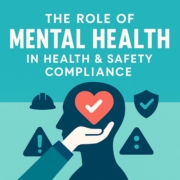
Wellbeing
A holistic approach to worker health, covering both mental and physical wellbeing. Employers are increasingly expected to integrate wellbeing into their safety management.
Example: An employer introducing flexible working hours and mental health first aiders to reduce stress and burnout.
Work at Height
Any activity where a person could fall and injure themselves. Governed by the Work at Height Regulations 2005, employers must avoid work at height where possible, and ensure proper planning, equipment, and supervision.
Example: A window cleaner using a mobile elevated work platform (MEWP) with a harness and guardrails.
Work Equipment
Defined by the Provision and Use of Work Equipment Regulations 1998 (PUWER), this covers any machinery, tool, or device used at work. Employers must ensure it is suitable, maintained, and that operators are trained.
Example: A factory ensuring its cutting machines have guarding, emergency stops, and inspection records.
Worker Consultation
The legal duty of employers under the Safety Representatives and Safety Committees Regulations 1977 or Health and Safety (Consultation with Employees) Regulations 1996 to consult workers (or their reps) on health and safety issues.
Example: A warehouse consulting staff before changing manual handling processes to new pallet systems.
Workplace
Any location under the control of an employer where employees carry out tasks. The Workplace (Health, Safety and Welfare) Regulations 1992 require workplaces to be safe, well-ventilated, and maintained.
Example: An office ensuring lighting, ventilation, and walkways are safe and hazard-free.
Workplace Exposure Limits (WELs)
Legal limits on the amount of hazardous substances workers can be exposed to, set under the Control of Substances Hazardous to Health (COSHH) Regulations 2002.
Example: A paint workshop monitoring solvent fumes to ensure exposure levels stay below HSE’s WELs.
Workplace Inspections
Regular checks carried out to identify hazards and ensure compliance with health and safety law.
Example: A site manager carrying out weekly inspections of scaffolding, PPE use, and fire exits.
Workplace Stress
Work-related stress is recognised by the HSE as a major occupational health issue. Employers must assess and manage psychosocial risks under the Management of Health and Safety at Work Regulations 1999.
Example: An NHS trust conducting stress risk assessments and offering counselling support for staff.
Workstation (Display Screen Equipment)
A setup including screen, keyboard, desk, chair, and environment. Employers must ensure workstations are safe under the DSE Regulations 1992.
Example: An office providing adjustable chairs, monitor risers, and training for correct workstation posture.
Workplace Transport Safety
Management of vehicles, pedestrians, and site layout to prevent collisions and accidents.
Example: A distribution centre using one-way traffic systems, pedestrian walkways, and forklift exclusion zones.
Waste Management (Workplace)
Employers must handle, store, and dispose of waste safely under the Environmental Protection Act 1990 and related legislation.
Example: A manufacturer segregating hazardous chemical waste for collection by a licensed disposal company.
X – Z
X-Rays (Ionising Radiation)
X-rays are a form of ionising radiation used in healthcare, engineering, and security. Employers must manage exposure under the Ionising Radiations Regulations 2017 (IRR17).
Example: A hospital ensuring radiographers use lead aprons, shielding, and controlled zones to keep radiation exposure as low as reasonably practicable (ALARP).
Young Workers
Anyone under 18 who is employed. Employers must carry out specific risk assessments under the Management of Health and Safety at Work Regulations 1999 to account for their inexperience and vulnerability.
Example: A construction firm providing extra supervision and restrictions on hazardous tasks for a 17-year-old apprentice.
Zero Harm
A safety philosophy where the goal is to eliminate all injuries and incidents in the workplace. It emphasises leadership commitment, proactive safety culture, and continuous improvement.
Example: A utilities company adopting a “Zero Harm by 2030” strategy, introducing leading indicators, behavioural safety training, and worker engagement programmes.
Zoonoses
Diseases that can pass between animals and humans, often a concern in agriculture, veterinary work, and laboratories. Employers must manage risks under COSHH 2002 and other sector-specific legislation.
Example: A farm ensuring workers wear PPE and wash thoroughly after handling livestock to reduce the risk of contracting leptospirosis (Weil’s disease).
Final Thoughts
Health and safety doesn’t need to be complicated. By breaking down technical terms into simple explanations and real examples, we make safety practical, relatable, and easy to apply. At BV Associates, our goal is to ensure that learners and businesses don’t just “know the terms” but also understand how to use them in everyday work.
If you’d like support with training, audits, or compliance, contact us at 01494 864100 or visit www.bvassociates.co.uk.
BV Associates Limited — Tried. Tested. Trusted.
Copyright BVA Ltd dtd 3 Oct 2025





























 BV Associates Limited Feb 25