
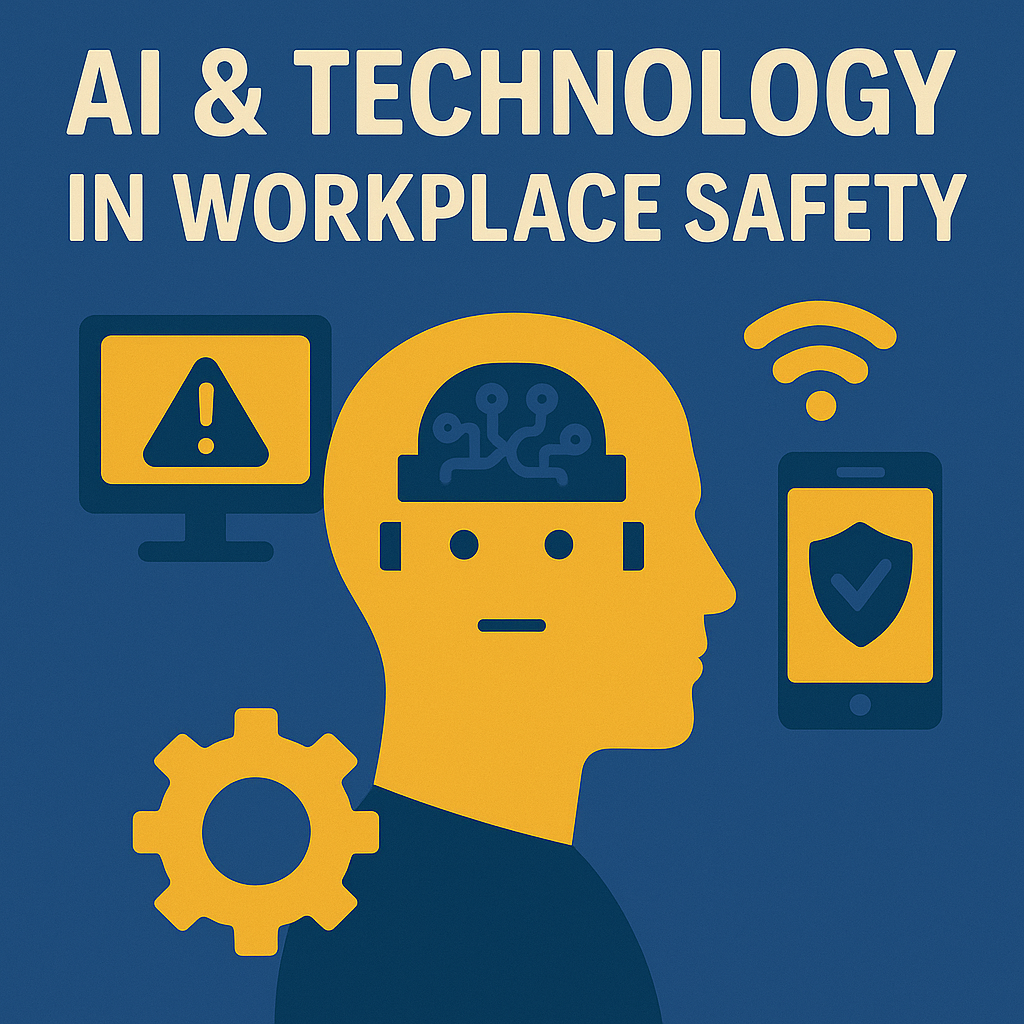
AI & Technology in Workplace Safety
By Dean Ferguson, CEO of BV Associates Ltd
When I started in health and safety, much of the work was paper-based: risk assessments completed with clipboards, manual record-keeping, and reporting systems that were often slow and reactive. Fast-forward to today, and technology – especially artificial intelligence (AI) – is reshaping how organisations manage workplace safety.
From predictive analytics that forecast accidents before they happen, to wearable devices that monitor worker fatigue, the tools available today are more powerful than ever. But with that power comes responsibility: businesses must learn how to use these technologies effectively and ethically.
The Rise of AI in Health & Safety
AI is no longer a futuristic concept; it is already embedded in the workplace:
- Predictive analytics – By analysing vast amounts of incident data, AI systems can predict where risks are most likely to occur. For example, algorithms can forecast accident “hotspots” on construction sites based on previous patterns.
- Computer vision – Cameras combined with AI can identify unsafe behaviours in real-time, such as a worker not wearing PPE, and send alerts immediately.
- Natural language processing – AI systems can scan safety reports, near-miss records, and even employee feedback to highlight trends that might otherwise be overlooked.
These tools give organisations the ability to shift from reactive safety management to a proactive, prevention-first approach.
Wearables and Smart Devices
Beyond AI, wearable technologies are increasingly common in industries like construction, logistics, and manufacturing. Examples include:
- Smart helmets that monitor exposure to noise, vibration, or toxic gases.
- Wearable fatigue trackers that measure heart rate and movement to detect exhaustion.
- Location trackers that alert supervisors if workers enter restricted or dangerous areas.
For lone workers, these devices can be lifesaving, automatically alerting managers or emergency services in the event of a fall or lack of movement.
Drones and Robotics
Drones are now widely used to inspect hard-to-reach areas – rooftops, scaffolding, or confined spaces – reducing the need for human workers to enter hazardous environments. Robots, meanwhile, are taking on tasks like lifting heavy loads or handling dangerous materials.
The key benefit? Reducing human exposure to high-risk tasks while improving efficiency.
The Benefits of Technology for Safety
- Faster Reporting and Response – Digital tools allow incidents to be logged in real time, enabling immediate action.
- Better Data for Decision-Making – AI insights help prioritise risks and allocate resources more effectively.
- Reduced Human Error – Automation removes some of the inconsistencies caused by manual processes.
- Enhanced Training – Virtual reality (VR) and augmented reality (AR) simulations provide immersive, hands-on safety training in a risk-free environment.
Challenges and Considerations
While the opportunities are significant, organisations must also be aware of the challenges:
- Cost of implementation – Advanced systems require upfront investment.
- Data privacy – Monitoring employees raises ethical and legal questions around data use.
- Over-reliance on technology – AI should complement, not replace, human judgement.
- Training needs – Staff must be equipped to use new technologies effectively.
The businesses that succeed will be those that integrate technology thoughtfully into their wider safety management systems, ensuring it enhances rather than complicates operations.
How BV Associates Can Help
At BV Associates, we specialise in helping organisations adapt to modern safety challenges. Our courses provide the knowledge and confidence needed to integrate technology into compliance systems:
- NEBOSH General Certificate – covering the principles of modern safety management, including how to use data effectively.
- IOSH Managing Safely – ideal for managers looking to embed technology into everyday safety practices.
- Risk Assessment & Incident Investigation Training – ensuring that technology enhances, rather than replaces, sound professional judgement.
By combining technology with skilled people, businesses can create safer, more efficient workplaces.
Final Thoughts
Technology is not a silver bullet. AI, wearables, drones, and smart systems all offer incredible opportunities – but only if they are used wisely. The real power of these tools lies in supporting human decision-making, not replacing it.
The future of workplace safety will be built on a partnership between skilled professionals and intelligent technology. Companies that embrace this balance will reduce accidents, cut costs, and build a reputation for innovation and responsibility.
To learn how BV Associates can help your organisation integrate modern safety practices, call us today on 01494 864100.
Wording copy write BV Associates Ltd dtd 19 Sept 25.


